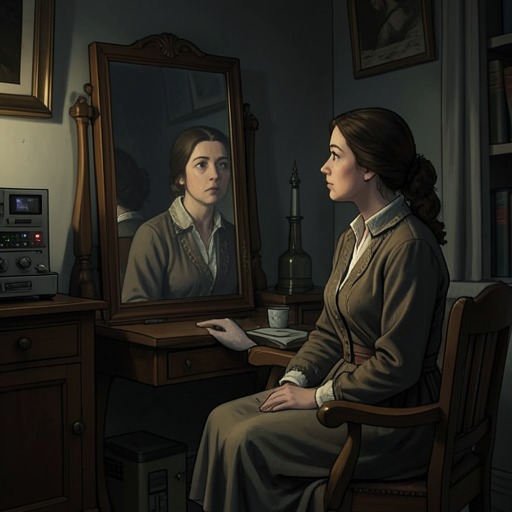
Rachel secretly tries to conceive with Robbie
The GodmotherRachel Elliot’s secret attempt to conceive with Robbie Dexter transforms her desire for motherhood into a test of trust: she wants a child and imagines a future with Robbie, yet withholds from him that she has stopped using contraception. The plan begins as an effort to make uncertainty yield to her wishes, but its secrecy increasingly conflicts with the honest partnership she hopes to build.
The decision and the first proposal
Rachel’s decision to have a child is momentous enough that she hesitates to commit it to her diary. When she finally records it, she is preparing to see Anita Cavanagh, and even the act of writing feels subject to an imagined audience’s judgment. Her unease establishes that the decision is not casual: she is trying to make a private resolve definite.
Rachel first approaches Nathan Kramer with a request to help her conceive. She stresses that she wants to become a mother on her own, without later seeking money or parental commitment from him, and offers to put that understanding in writing. When Nathan mistakes her announcement for news that she is already pregnant, she clarifies that she is asking for his help, not telling him of a pregnancy. This proposed arrangement is distinct from the secret attempt that follows: with Robbie, the question is no longer only how Rachel might conceive, but whether she can pursue that possibility without his knowledge.
A concealed choice in the renewed relationship
After she and Robbie resume their relationship, Rachel has unprotected sex with him while allowing him to assume she is using contraception as before. She puts her contraceptive cap away and hides it in her vanity case. Her reasoning is urgent and deliberate: approaching forty, she believes every cycle matters, and she is growing more confident that she and Robbie could share a future. She tells herself that if the relationship fails, she can manage alone.
The secrecy persists beyond one encounter. During a later intimate moment, Rachel realizes that it is the thirteenth day of her cycle and again thinks that she should tell Robbie. She understands that confession might not bring the objection she fears; he could be delighted. What frightens her is the point of no return: if he welcomes the prospect, the consequences could become difficult to undo. The scene shows how her plan depends not only on avoiding an argument but also on delaying a choice that would make their relationship and its responsibilities explicit.
Hope, guilt, and the imagined future
Rachel repeatedly tries to make pregnancy settle the uncertainties around her relationship. She tells herself that getting pregnant would help everything fall into place, as though fate could decide what she has not yet openly discussed with Robbie. But she recognizes that this explanation does not withstand scrutiny. In her own estimation, Robbie is already a loving partner, an old friend, and someone who wants to be a father; she loves and desires him, and misses him when they are apart. Her continued silence is therefore not a response to a lack of evidence that they might build a life together. It is a concealment within a relationship she increasingly values.
That contradiction produces shame. Rachel considers confessing during their reunion but holds back, remembering her confrontation with Nathan and fearing that too much candor too soon could damage what she and Robbie have regained. Even when she tells Robbie about a possible work change, she does not disclose either her wish to become pregnant or their unprotected sex. Her attempt to let events decide their future begins to look less like trust in fate than a way of postponing a conversation with the person whose life would also be changed.
The limits and consequences of the plan
A pregnancy test is negative. Rachel is relieved, but the result does not resolve the conflict: she knows that a future with Robbie requires honesty. A later visit to Robbie in Devon brings the question of whether she loves him back into focus, alongside her unease about the deception and her memory of a more vulnerable version of him. The possibility of motherhood has not made her decision simpler; it has made the cost of keeping it secret clearer.
While waiting at Robbie’s house, Rachel reads a fertility article that reports growing difficulty conceiving and increasing use of infertility treatment. The article gives her private anxiety a broader context, but offers no assurance that her own plan will work. In another later moment, Will Raphael tells Rachel that he cannot have children because of congenital absence of the vas deferens, a disclosure that further distinguishes the desire to become a parent from the ability to conceive. Neither detail supplies a resolution to Rachel’s attempt with Robbie.
Robbie, meanwhile, finds a packet of condoms and recalls that Polly Drayton had told him she was about to have her period when they were together shortly before Rachel returned to his life. He had trusted that timing and now questions the risk he and Polly took. His discovery does not establish that Rachel is pregnant; instead, it reveals how assumptions about contraception and fertility have shaped the choices of both people around her. Rachel’s secret attempt remains unresolved in these episodes, but its central consequence is already apparent: a hoped-for child cannot by itself secure a shared future, and a decision about parenthood made for two people without an honest conversation threatens the trust that future would require.